HONG KONG · SPACE LOGISTICS · CAPITAL

The governed route from capital to orbit.

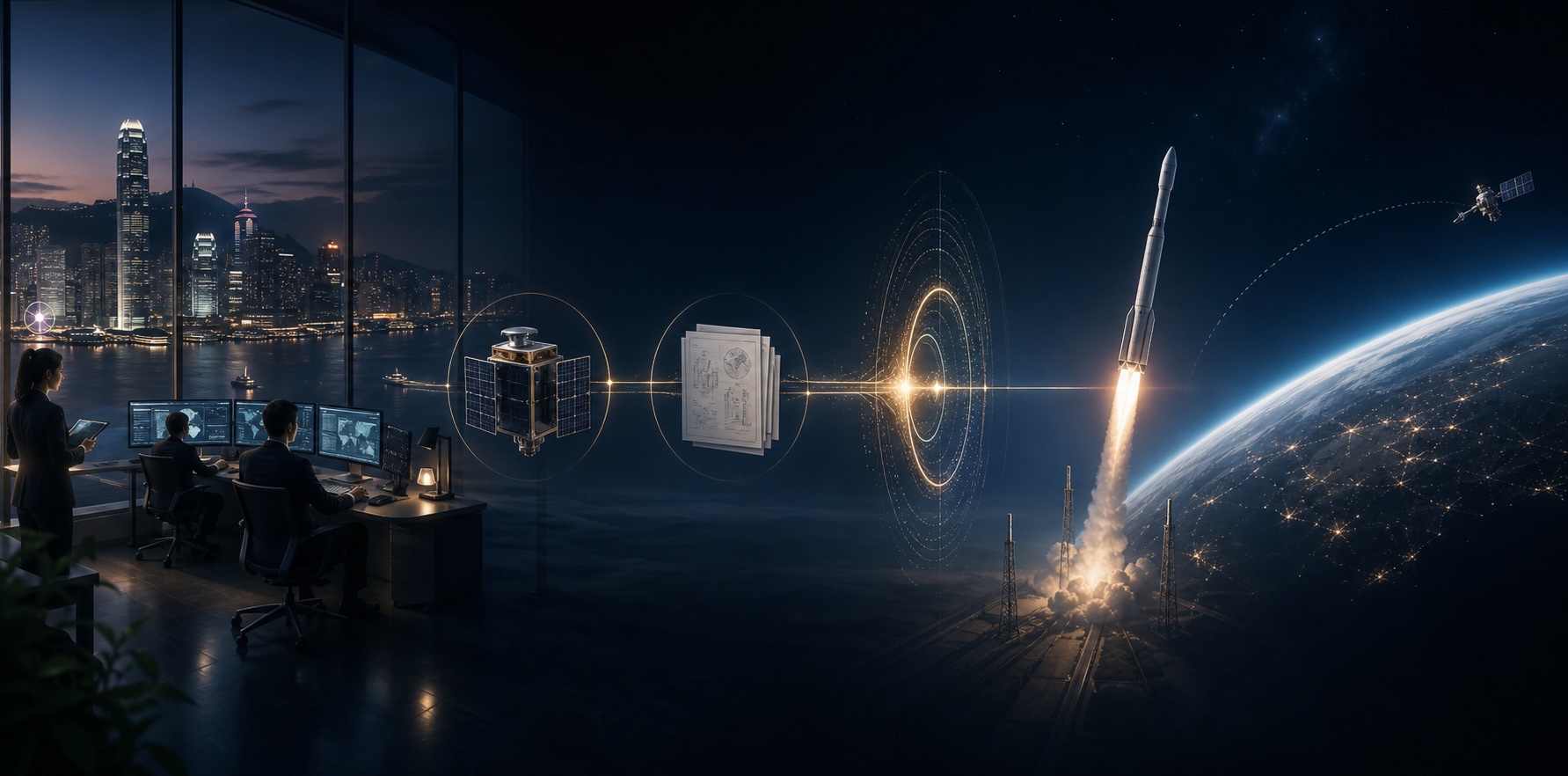
OCP connects qualified mission demand, launch capacity, transaction structuring and delivery coordination through one accountable, cross-border workflow.

CAPITAL → CAPACITY → MISSION DELIVERYEVIDENCE BEFORE SCALE
01One accountable interface
02Cross-border coordination
03Mission-specific capacity
04Evidence before scale
Operating approach

The workflow below explains how OCP proposes to coordinate a mission from qualified demand through delivery evidence.

Conceptual imagery

Illustrations express the proposed operating model; they are not evidence of owned assets, capacity or partnerships.

Clear boundary

OCP does not manufacture rockets or operate launch vehicles.

01 / THE OPERATING PROBLEM

Access to orbit is not simply a question of available rocket tonnage.

A commercially useful launch slot must fit the payload, target orbit, schedule and contractual rights. Capacity that cannot meet those conditions is not interchangeable.

01

Vehicle fit

Payload mass, volume, interface and technical acceptance determine whether a mission can fly.

02

Target orbit

Altitude, inclination and deployment requirements make each capacity option mission-specific.

03

Schedule certainty

A nominal launch opportunity only matters when timing aligns with integration, financing and customer delivery.

04

Bankable rights

Deposits, rebooking, delay, refund and risk-allocation terms determine whether capacity can support a transaction.

02 / THE OCP PLATFORM

One governed operating view from mandate to mission.

OCP is designed to coordinate the commercial interfaces around a mission. It does not manufacture rockets or operate launch vehicles.

01DEMAND

Qualify demand

Confirm mission, payload, orbit, timing, budget and decision authority.

Incoming
Mission brief and decision authority
OCP gate
Qualify mission, timing, budget and authority
Defined output
Qualified mandate for diligence
02EVIDENCE

Diligence evidence

Review counterparties, technical readiness, compliance requirements and funding capacity.

Incoming
Counterparty and readiness evidence
OCP gate
Review technical, compliance and funding readiness
Defined output
Documented diligence record
03CAPACITY

Match capacity

Compare suitable capacity, schedule, commercial terms and integration pathways.

Incoming
Payload, orbit, schedule and commercial constraints
OCP gate
Compare compatible capacity and integration paths
Defined output
Decision-ready capacity shortlist
04STRUCTURE

Structure the bridge

Coordinate contracts, payment milestones, risk allocation and the capital solution.

Incoming
Selected pathway and stakeholder requirements
OCP gate
Coordinate contracts, payments, risk and approvals
Defined output
Coordinated transaction structure
05EXECUTION

Manage execution

Track documentation, integration, schedule changes, approvals and delivery evidence.

Incoming
Approved transaction and integration plan
OCP gate
Track documentation, changes and milestones
Defined output
Delivery evidence and issue record
06LEARNING

Report and repeat

Create a disciplined record for stakeholders, future transactions and recurring relationships.

Incoming
Mission and transaction record
OCP gate
Report outcomes, exceptions and lessons
Defined output
Repeatable institutional record

03 / WHY OCP

The proposed advantage is institutional integration—not artificial exclusivity.

The proposed OCP workflow brings financial, commercial and mission interfaces into one accountable process, reducing the number of gaps a customer, provider or capital partner must manage alone.

A

Transaction discipline

Structure mandates, documentation, payment milestones, reporting and evidence gates around the mission.

B

Capacity coordination

Translate mission requirements into comparable capacity, schedule and integration options.

C

Cross-border interface

Support bilingual communication and coordination across Hong Kong, Mainland China, Southeast Asia, Belt and Road markets and international providers.

04 / WHY NOT SIMPLY BYPASS OCP?

Direct access solves only one part of the transaction.

A launch provider can sell its own services, but a cross-border mission may still require demand qualification, provider comparison, documentation, settlement, integration coordination, schedule management and stakeholder reporting.

OCP’s value is the governed interface across those responsibilities—not control of the launch vehicle.
  • One accountable commercial interface
  • Mission-to-capacity translation
  • Cross-provider comparison
  • Contract and payment coordination
  • Schedule and delay-risk management
  • Governance, evidence and reporting

05 / COMPETITIVE LANDSCAPE

OCP operates within a real field of alternatives.

The relevant question is not whether competitors exist, but which interfaces each model integrates and who remains accountable for the gaps.

Swipe or scroll horizontally to compare →

How OCP’s proposed coordination model compares with common alternatives
ModelPrimary strengthTypical gapProposed OCP response
Direct provider salesProvider-specific capacity and technical interfaceComparison, financing and cross-border coordination remain with the customerCross-provider coordination around mission fit, terms and stakeholder requirements
Broker / adviserIntroductions and commercial adviceMay not integrate capital, contracts, execution and reportingGoverned workflow from qualification through delivery evidence
In-house capabilityCustomer control and domain knowledgeRequires specialist relationships, systems and repeat transaction volumeShared specialist interface without building every capability internally
OCP platformProposed integration across capital, capacity and mission coordinationMust prove access, execution quality and repeatabilityEvidence-led milestones, accountable delivery and network development

06 / PHASED DEVELOPMENT

Two proposed service layers. One governed development path from launch access towards future orbital services.

Review the two concepts to see how OCP proposes to coordinate each service layer—and where the current evidence boundary sits.

CONCEPT ILLUSTRATION · NOT A CURRENT OCP ASSET

PHASE 1 · WORKING DIRECTION

Launch-as-a-Service (LaaS)

Focus on qualified demand, suitable capacity, back-to-back commercial terms, integration coordination and documented delivery.

  1. 01Qualify the mission
  2. 02Match launch capacity
  3. 03Structure terms & risk
  4. 04Coordinate integration & delivery

OCP coordinates the commercial and mission interfaces; it does not manufacture rockets or operate launch vehicles.
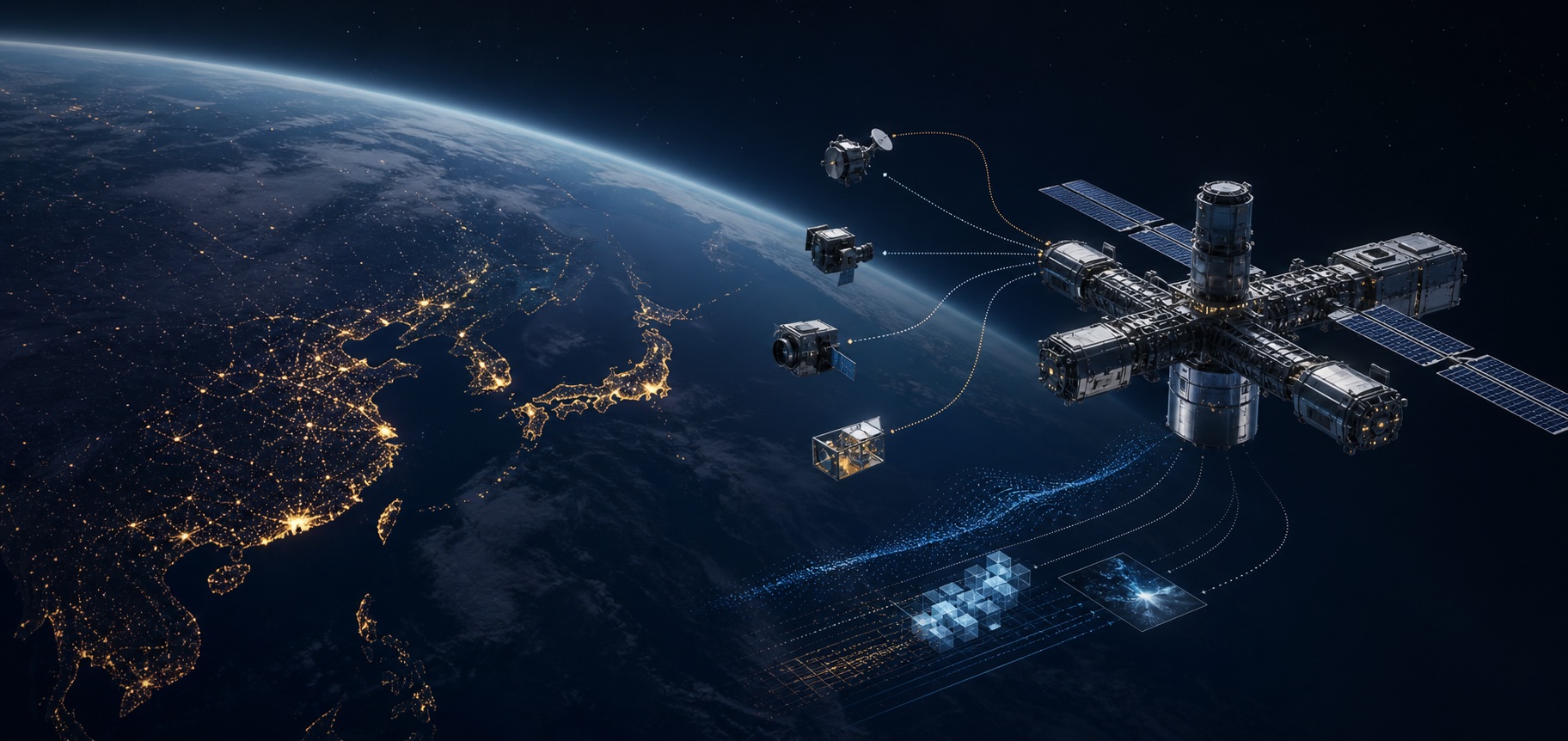
CONCEPT ILLUSTRATION · NOT A CURRENT OCP ASSET

PHASE 2 · AFTER EVIDENCE

Potential Space-as-a-Service (SpaaS) direction

Explore professionally operated space platforms only after OCP has execution evidence, counterparties and institutional operating discipline.

  1. 01Define the orbital use case
  2. 02Assess suitable hosted-platform options
  3. 03Structure the ongoing service
  4. 04Coordinate service requirements, evidence & reporting

A future working direction after LaaS execution evidence, counterparties, approvals and operating discipline—not a claim of current orbital assets.

INSTITUTIONAL LAYER

Capital & Governance

Develop suitable investment and mission structures subject to legal, regulatory, commercial and management approval.

07 / SPACE-ECONOMY MAP

Space is a supply chain—not a single launch event.

The commercial opportunity extends from an Earth-based requirement through mission design, launch, orbital operations, downstream services and responsible end-of-life planning.

01Demand & capital

Define the use case, customer, decision authority, budget and investable structure.

02Mission & payload

Translate the requirement into payload, orbit, schedule, technical and regulatory constraints.

03Launch & integration

Match compatible capacity, commercial rights, integration milestones and delivery evidence.

04Orbit & services

Operate the mission, deliver data or hosted services, and maintain a governed record.

05Lifecycle & reuse

Plan disposal, re-orbit, retrieval or future servicing before the mission reaches end of life.

INDEPENDENT LIVE CONTEXT

Explore the orbital environment

SatelliteMap.space is an independent third-party visualisation of satellite positions and constellations. This link is provided for education and does not indicate an OCP partnership, endorsement or data warranty.

Open external satellite map ↗

This is a conceptual value-chain map. It does not claim that OCP currently performs every activity shown.

08 / THE WIDER OPPORTUNITY

Today’s space activity is the beginning of a broader logistics market.

As missions diversify, the commercial interfaces around capacity, financing, integration, timing and delivery become more numerous—not less important.

NOW

Connectivity, Observation & PNT

Communications, Earth observation, positioning, navigation and timing continue to create recurring launch and replenishment needs.

NEXT

Space-based Computing

Future computing infrastructure may use space-based power, thermal and network advantages, creating new transport and servicing requirements.

EMERGING

Orbital Manufacturing

Microgravity and vacuum environments may support specialised research and production, requiring dependable two-way mission logistics.

09 / FOUNDING LEADERSHIP

Commercial access meets institutional execution.

The current leadership proposition combines relationship development, aviation and aerospace finance, legal and policy experience, commercial structuring and cross-border coordination.

AF
Co-Founder & Co-Chief Executive Officer

Allen Y. Fung

Leads relationship development, commercial discussions, market access and the validation of launch-provider and institutional channels.

DY
Co-Founder & Co-Chief Executive Officer

Prof. Dewey Yee

Brings experience across aviation and aerospace finance, law, policy, education and the structuring of complex cross-border commercial relationships.

10 / PERSPECTIVES & SOURCE BRIEFS

Different voices, clearly identified.

Perspectives is the home for original OCP analysis, invited independent viewpoints and concise source briefs. Every item identifies its author or source and separates fact, interpretation and external material.

01

OCP Insights

Original analysis written by named members of the OCP team. The byline identifies the author and the publication date.

02

Guest Perspectives

Original contributions from invited specialists. Their views are their own unless OCP expressly states otherwise.

03

Source Briefs

Short OCP summaries that link readers to the authoritative original source without republishing the source article.

SOURCE BRIEF · OFFICIAL

End-of-life planning starts before launch

NASA’s mission closeout guidance shows why decommissioning and disposal options should be considered during earlier project phases.

Read NASA source ↗
SOURCE BRIEF · OFFICIAL

A practical debris-mitigation checklist

UNOOSA compiles international guidance on limiting debris release, break-ups, collision risk and long-term orbital presence.

Read UNOOSA source ↗

External sources remain the authoritative record. OCP summaries are educational working notes, not technical, legal or investment advice.

EDITORIAL & COPYRIGHT PRINCIPLES

Publish original work. Credit every source.

Contributors retain authorship and give OCP written permission to publish the agreed version. Third-party text, images, charts and data are used only with an applicable licence, permission or a carefully reviewed legal exception.

  • Every article carries a named author, date and category.
  • Guest opinions are labelled and do not automatically represent OCP.
  • Quotations are limited to what is necessary and include sufficient acknowledgement.
  • External articles are normally summarised and linked—not copied in full.
  • Images and charts require permission, a suitable licence or confirmed lawful use.
  • OCP may fact-check, edit or decline material before publication.

11 / GOVERNANCE

Credibility starts with a clear boundary between direction and evidence.

Working direction

A Hong Kong-based space-logistics platform; LaaS before SpaaS; cooperation and transaction proof before scale.

Subject to confirmation

Final legal and regulatory structure, executed capacity and customer terms, named partnerships and detailed investment economics.

Not claimed

OCP does not claim to manufacture rockets, operate launch vehicles, control orbital assets or hold approvals that have not been formally granted.

RESEARCH & ADVOCACY DIRECTION

Treat mission lifecycle as a governed sequence.

The meeting identified responsible lifecycle planning as a future research-centre topic. The sequence below is a discussion framework, not an OCP service claim.

  1. 01
    Plan before launchDefine useful life, disposal route, responsible parties and required evidence.
  2. 02
    Operate with awarenessMaintain tracking, conjunction, anomaly and decision records throughout operations.
  3. 03
    Execute end of missionDeorbit, controlled re-entry, retrieval or move to an appropriate disposal orbit.
  4. 04
    Report and learnArchive outcomes and feed lessons into the next mission and future governance work.

START A CONVERSATION

Discuss a mission, capacity requirement or strategic partnership.

For an initial conversation, share only non-confidential information. Detailed mission or investment materials should be exchanged through an agreed private process.

General enquiries info@orbitcapital.space
26th Floor, YF Life Centre
38 Gloucester Road, Wanchai
Hong Kong
Email OCP →